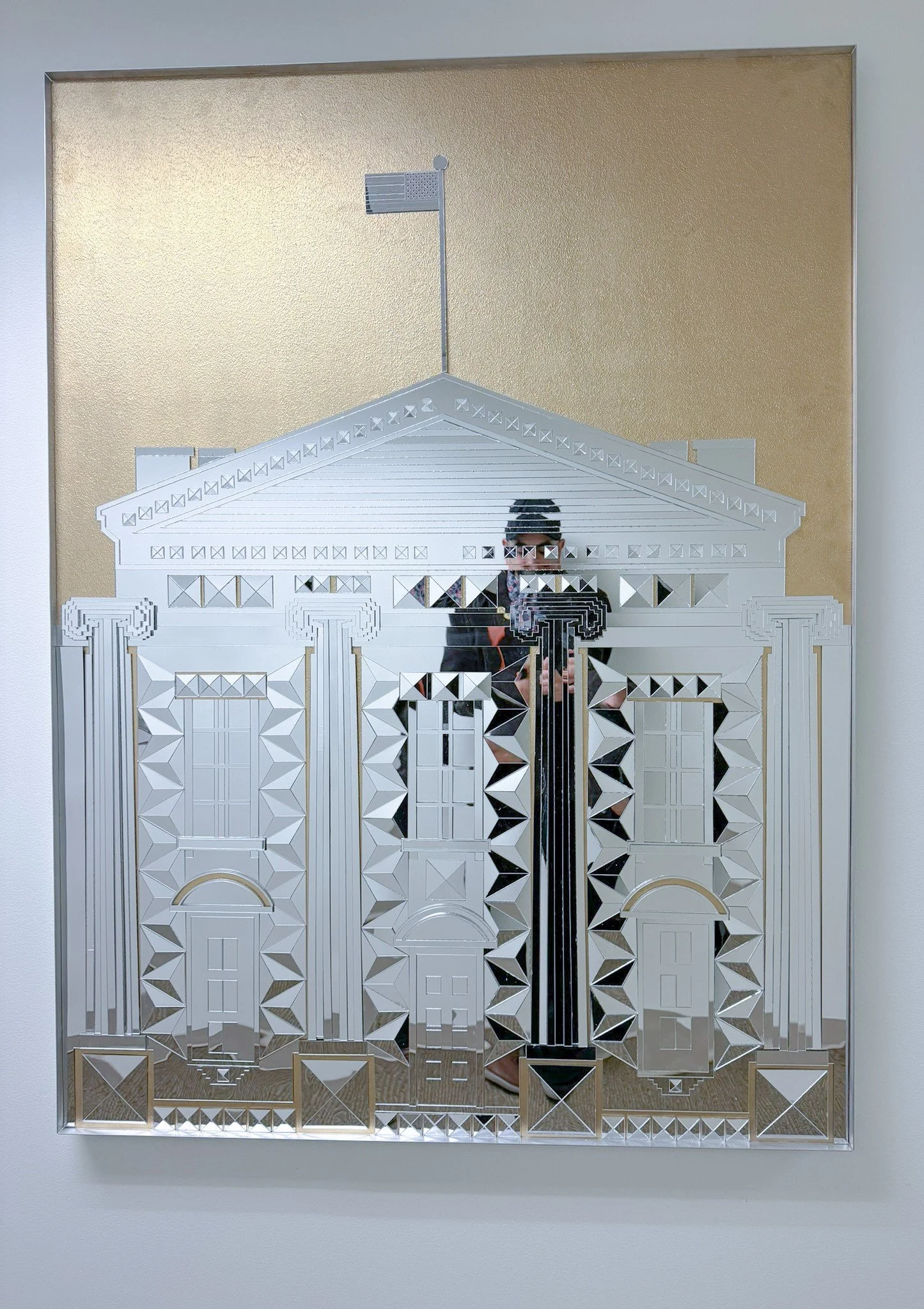
“What House Now?”
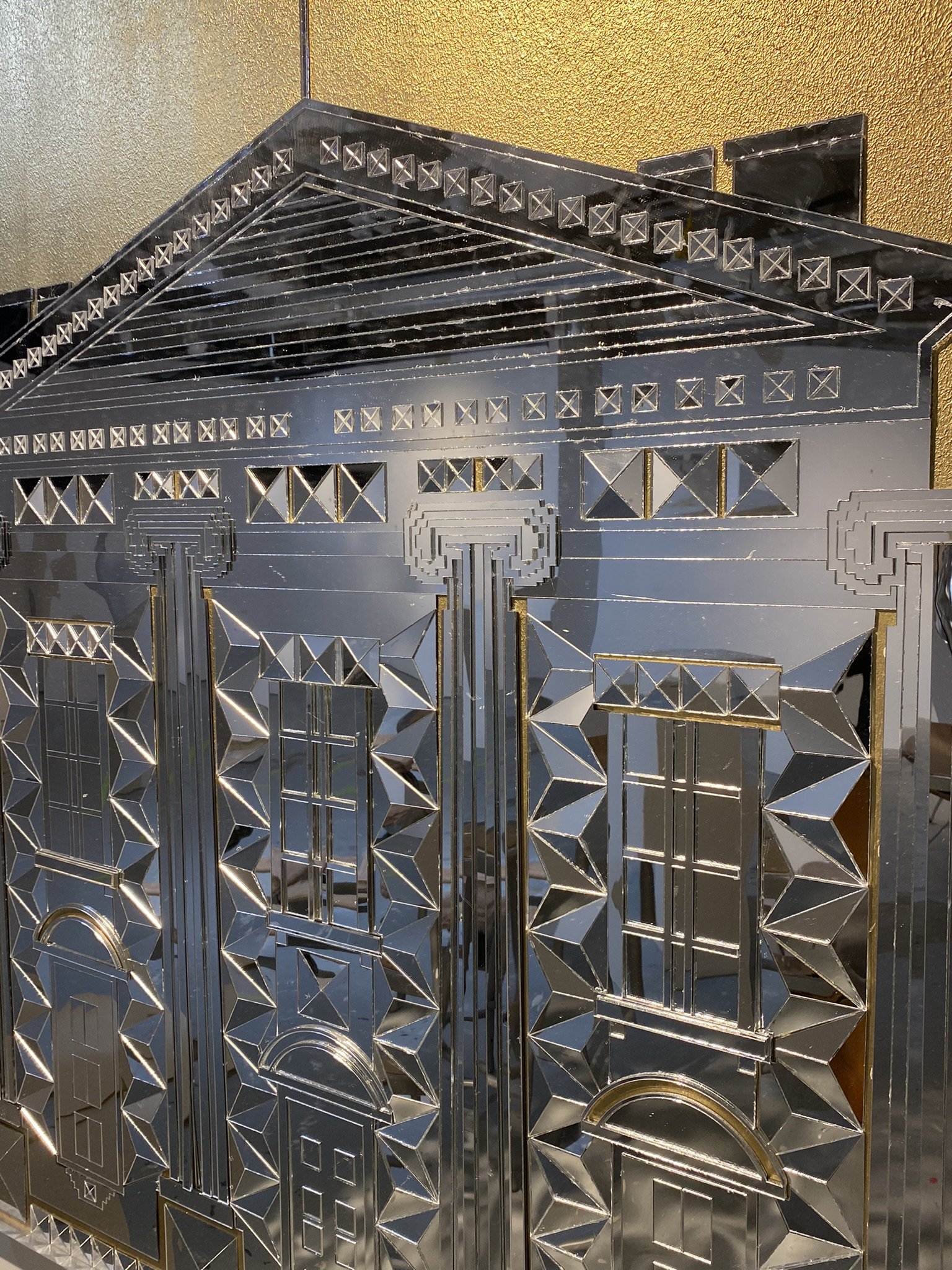
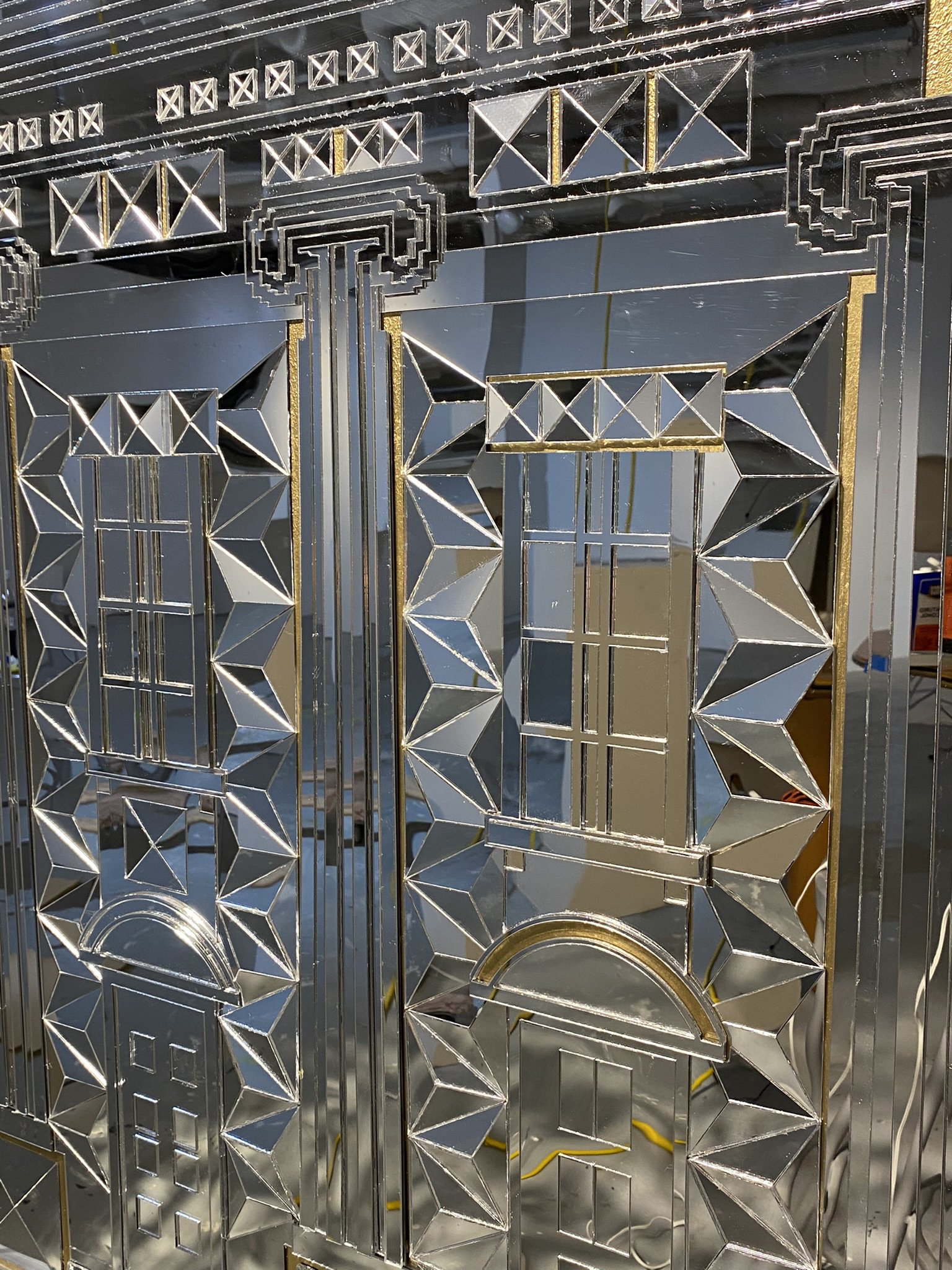
Mirror, Aluminum and Wood, 44”x56”,2022, Collaboration with Nooshin Hakim.
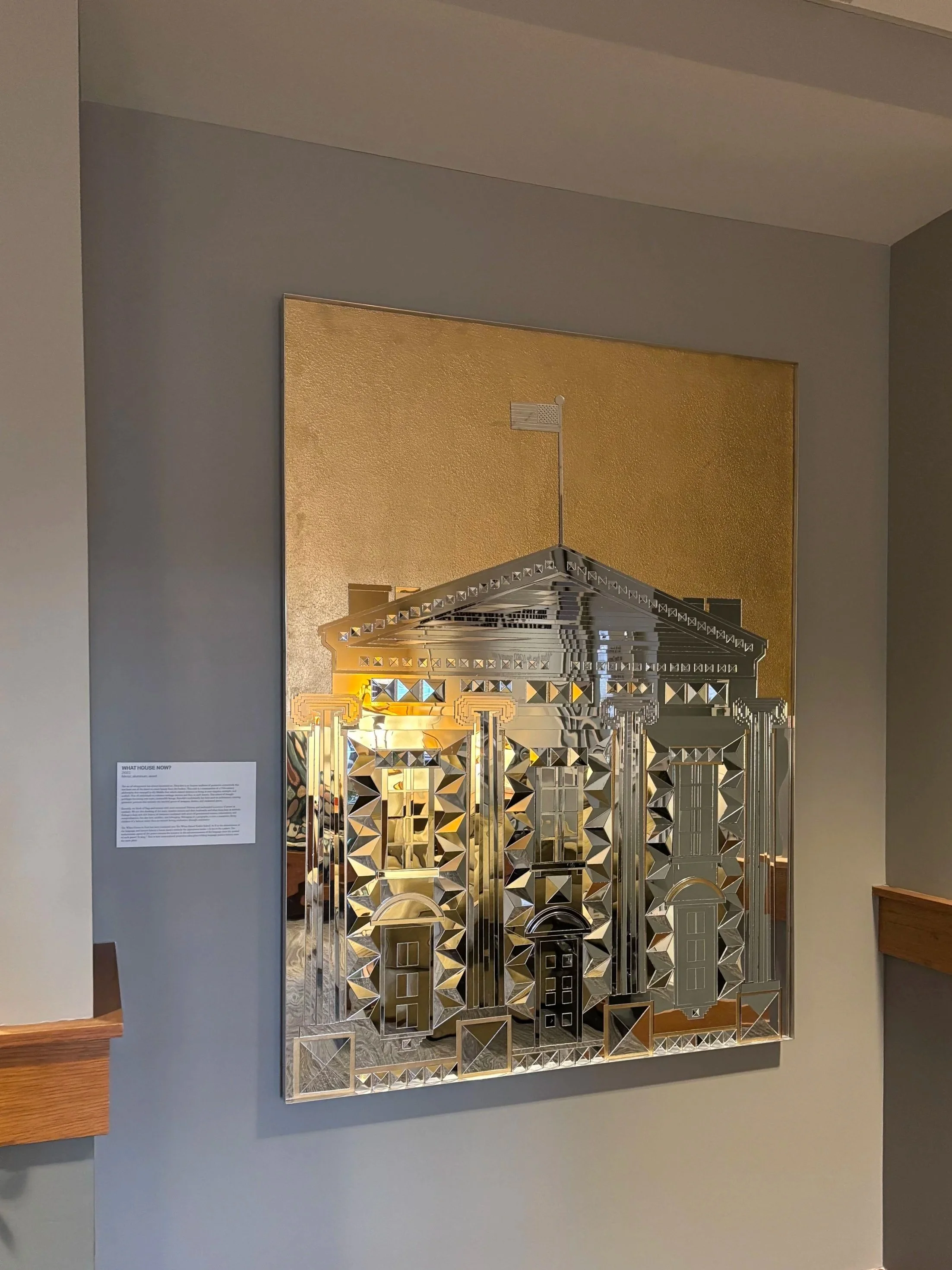
The act of salvagement has always fascinated us. Āina-kāri-Awena Karî (Kurdish) is a Middle Eastern tradition of geometric mirrorwork that emerged from the desire to create beauty from the broken. This craft is a continuation of a 15th-century philosophical tradition that originated in the Middle East, which viewed existence as being at once singular, multiple, and unified. That all individuals in existence undergo motion and flux at each instant. This school of thought prioritizes becoming over being static and immutable. Āina-kāri-Awena Karî (Kurdish) has traditionally been used in architecture, creating geometric patterns that adorn the internal spaces of mosques, shrines, and residential spaces. Recently, we have been paying more attention to flags and nations. Nations and landmarks! Locations of power as symbols. We are also thinking of the many stateless nations and their landmarks and what those bear as symbols. Perhaps a deep and rich history of resistance combined with traces of generational trauma, colonization, and marginalization, but also love, sacrifice, and belonging. Belonging to a geography, a river, a mountain. Being children of a habitat rather than its owners! Seeing civilization through coexistence. The White House in Farsi has been translated into The White Palace! Kakhe Sefeed. As if in the subconscious of the language and Iranian history, a house doesn’t embody the appropriate status —It has to be a palace. The authoritarian aspect of the power mounts the location in the subconsciousness of the language onto the symbol of such power, “A king.” That is how cross-cultural projection takes place folding language-politics-history onto the same plain.